The GemLightbox Alternative: Studio Jewelry Photos Without the Hardware
A lightbox gives consistent catalog shots. It cannot show a piece worn or write the listing. What an AI alternative does, and who should still buy the box.
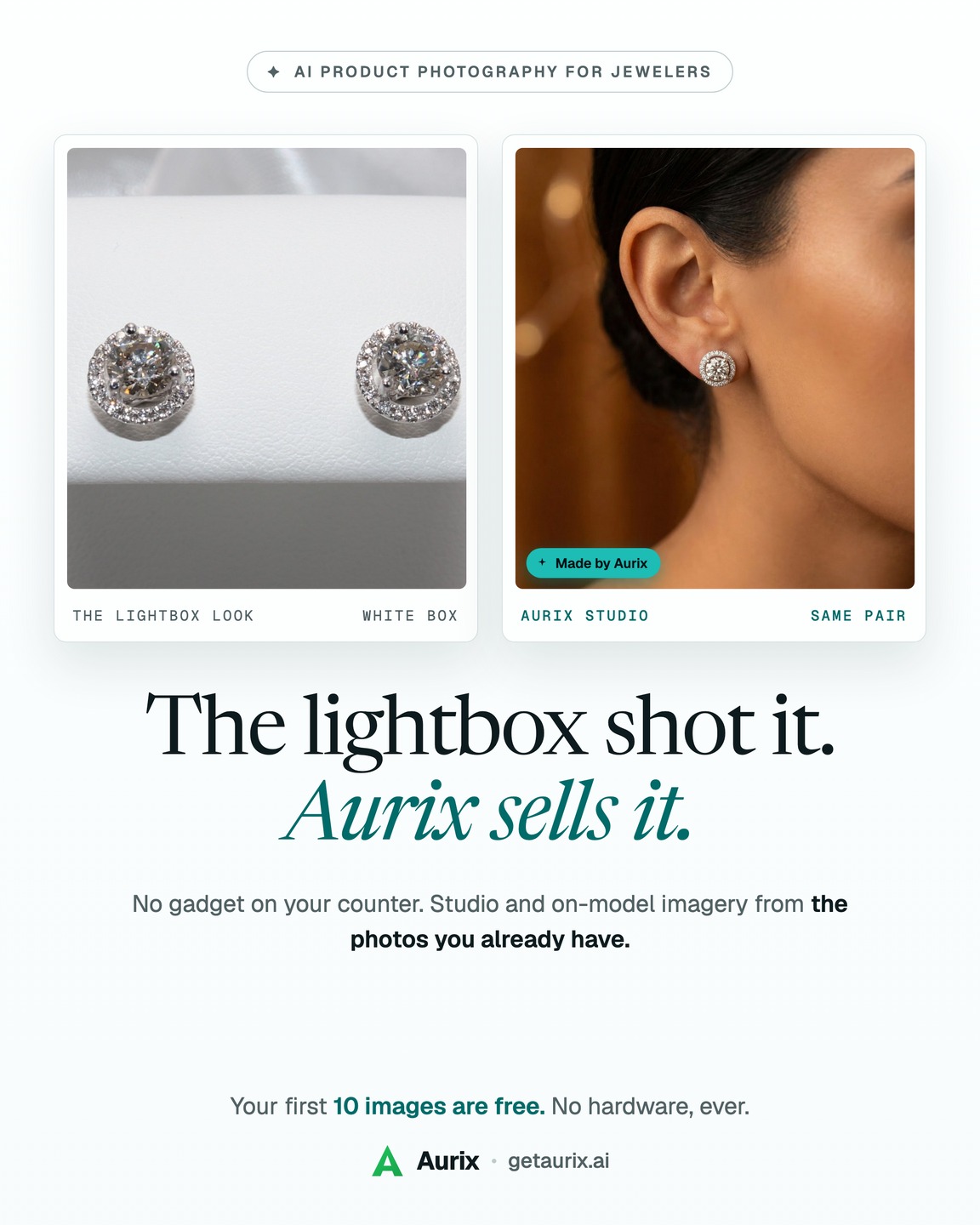
If you run a jewelry store, someone has probably pitched you a lightbox. GemLightbox is the best known: a small photo booth for jewelry that gives clean, repeatable shots on a plain background, plus turntable video. It does that job well, and it fixed the uneven counter photos that many stores lived with for years.
If you are looking for an alternative, it is usually because of what the box leaves undone. This guide covers what a lightbox does well, where it stops, what the software alternative looks like, and who should still buy the box.
What a lightbox does well
A lightbox controls the light. The piece sits in the same place, under the same light, every time, so the hundredth ring looks like it was shot on the same day as the first. Many lightbox setups pair with a phone app for background cleanup and turntable spins, which suits certificate listings and marketplaces that want a plain, standard image.
That consistency is real, and for some businesses it is all they need.
What a lightbox cannot do
- Show the piece worn. A box photographs a piece on a stand or a turntable. It cannot put a ring on a hand, a pendant at the collarbone or an earring beside the jaw, and those are the photographs that help a shopper judge size and fit.
- Set a scene. Still lifes on stone or silk, seasonal looks and social images still need a shoot.
- Remove the labor. Each piece is still cleaned, placed, shot, checked and uploaded by a person. Four hundred pieces is four hundred sessions.
- Write the listing. The photo is one part of the job. Every piece also needs a title, a description and a category.
The cost is worth checking too. The current professional models list in the low thousands of dollars before any staff time.
The alternative: start from the photo you have
Aurix works the other way round. It starts from a photo you already have, which can be a phone shot at the counter, a supplier image or a lightbox frame. You choose a Style and Aurix makes the finished photograph from your photo.
There are two kinds of shot:
- Staged shots show the piece on its own, on marble, silk, linen, velvet, wood, sandstone, slate or a clean studio backdrop.
- Lifestyle shots show it worn on a hand, neckline, ear or wrist. The models are generated, so there is no booking and no release form.
You can go in close for a macro detail or pull back and give the piece room. Save a Style once and run it across the catalog, so new arrivals come out in the same look as everything else.
Because the render is made from your photo, the job is to keep the piece itself the same. By default each new photograph waits in Review changes next to your original. If the metal color or a stone is off, you reject it or ask for a change before anything reaches your store.
Lightbox vs software, side by side
- Starting point. A lightbox needs the piece in the box. Aurix needs a photo of the piece, which you may already have.
- Shots you get. A lightbox gives plain backgrounds and turntable video. Aurix gives staged shots on a backdrop or surface, and worn shots on generated models.
- Time per piece. A lightbox takes a person at the box for every piece. With Aurix the person's time goes into reviewing results.
- Cost. A lightbox is a purchase up front, plus staff time on every piece for as long as you use it. Aurix is a monthly plan from $99 for 5,000 credits, and credits are used only when a generation completes.
- Listings. A lightbox stops at the photo. Aurix also writes the title, description and category.
Who should still buy a lightbox
If you need turntable video for certificates, photograph loose stones all day, or run an appraisal or wholesale process that wants a plain, standard capture, a lightbox is still a sensible tool.
It also pairs well with software. A clean, well-lit lightbox frame is a good starting photo for Aurix, so the two are not either-or.
If the goal is a website that sells finished jewelry, though, the box covers only part of it. Shoppers respond to pieces they can picture wearing, and that is the shot a box cannot take.
Other options people compare
Stores weighing a lightbox usually look at three other routes too. A product photographer gives the most control for hero and campaign pieces, at a per-image price; see our guide to hiring a jewelry photographer. A retouching service cleans up photos you already took; see jewelry photo retouching. And general AI product photography tools work for many products but need careful testing on jewelry; see AI product photography for jewelry for what to check.
Beyond the photo
Aurix also writes the listing. It reads the inventory code, writes it out as a title people search for, writes the description, assigns the category and, once you approve, publishes to your Shopify store. If you run Lightspeed at the counter, Aurix reads your products from it.
See every kind of shot Aurix makes. See plans: Starter is $99 a month, Growth $199 and Scale $399. To see Aurix first, book a 20-minute walkthrough. We run it on sample pieces.
Frequently asked questions
What is the best GemLightbox alternative?
It depends on what you need. For plain catalog shots and turntable video, another lightbox or a photographer will do. If you want worn shots, styled scenes and finished listings from the photos you already have, AI software such as Aurix is the closer fit.
Can I use lightbox photos with Aurix?
Yes. A clean lightbox frame is a good starting photo. Aurix makes staged or worn photographs of the same piece from it, and each one waits for your review next to the original by default.
Does Aurix need special equipment?
No. A clear phone photo works, as long as the whole piece is visible, the center stone is sharp and the color is close to the real piece. Supplier photos work too.
Does Aurix do turntable or 360 video?
No. Aurix makes still photographs. If 360 video for certificate listings is a must, a lightbox is the better tool for that part.
How much does Aurix cost compared with a lightbox?
A lightbox is a one-time hardware purchase plus staff time on every piece. Aurix is a monthly plan: Starter is $99 for 5,000 credits, Growth $199 for 15,000 and Scale $399 for 40,000.