Jewelry Product Descriptions That Sell: A Template and Examples for Rings, Necklaces and Earrings
A plain template for jewelry product descriptions, the facts each category needs, words to drop, the disclosure rules for lab-grown stones, and three worked examples.
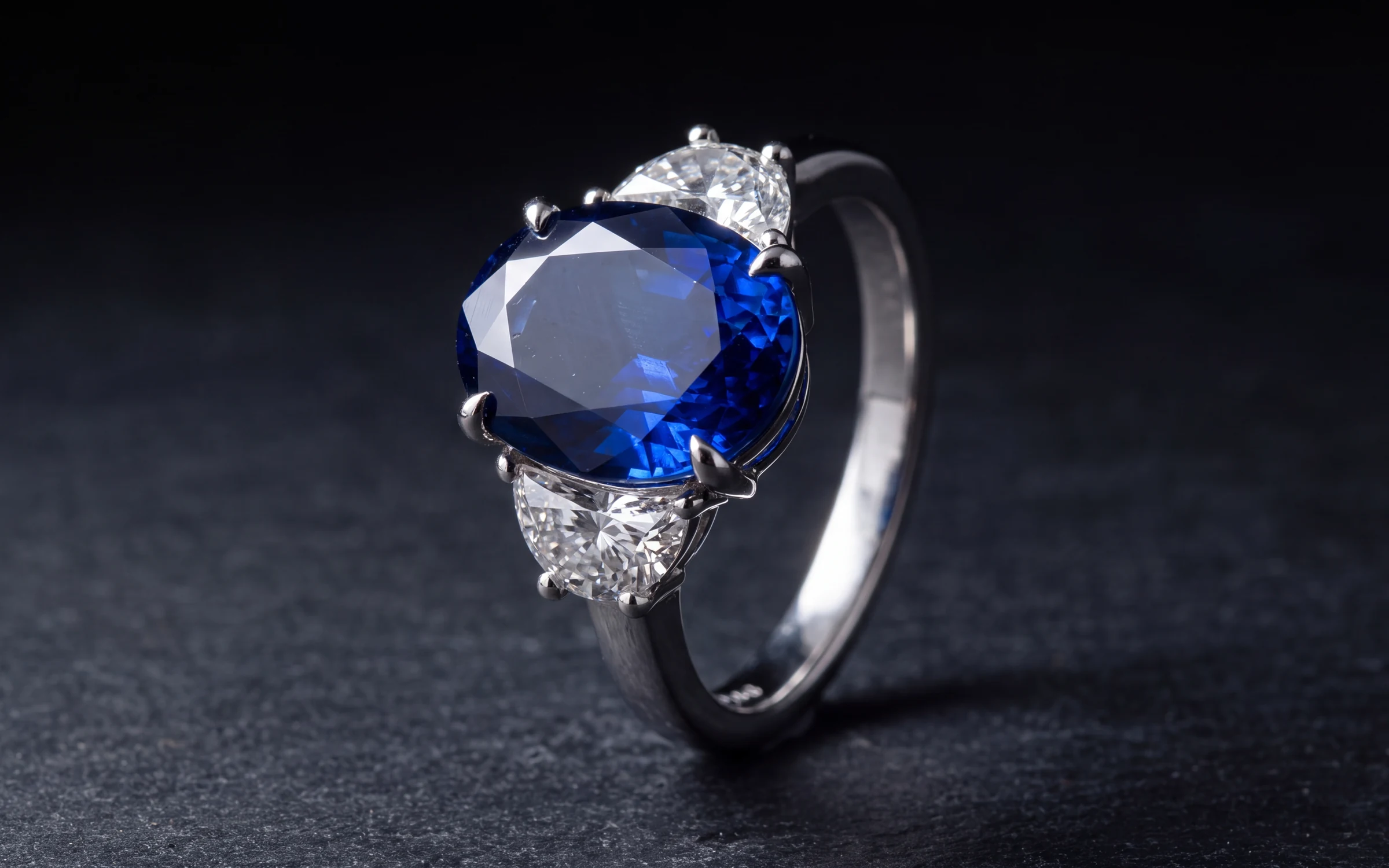
Walk the cases in most jewelry stores and every piece has a story the staff can tell from memory: where the stone came from, how the ring sits on a finger, whether the band can be sized. Then look at the same pieces online. Most listings carry the inventory code, a single line like "Beautiful diamond ring," or a paragraph copied from the supplier that every other store selling the line also uses.
A product description is the closest thing a website has to the person behind the counter. This guide covers what a jewelry description needs to do, a template you can use for every piece, the facts each category needs, the words worth dropping, the disclosure rules that apply to stones and metals, and three worked examples.
What a jewelry description has to do
A customer reading a listing is trying to answer a short list of questions before they buy or book a visit:
- What exactly is this? Metal, stones, shape and size.
- Will it look right on me, or on the person I'm buying for?
- Is it worth the price?
- Can I trust this store with the purchase?
The photos answer some of that. The description has to answer the rest, in words a customer actually uses. It also has to match how people search. Nobody types "14KW RD DIA SOL" into Google. They type "14k white gold round diamond solitaire" or "oval engagement ring with halo." A description written in those words gives search engines something to match, and it gives the customer the same facts your staff would give in person.
A template for every piece
You don't need a different approach for each item. One structure covers almost everything in the case:
- An opening sentence that says what the piece is in plain words. Metal, main stone, style.
- One or two sentences on how it looks and wears. Low or high setting, everyday or occasion, how the stone catches light, how the chain drapes.
- A short list of specifications. The measurable facts, laid out so they're easy to scan.
- A service line. Sizing, engraving, matching pieces, financing or a consultation, whatever your store actually offers.
- What's included. A grading report, an appraisal, a box.
Keep the paragraph part short. Fifty to 150 words of prose plus a clean spec list reads better on a phone than four paragraphs of adjectives, and the spec list is what serious buyers scroll to first.
The facts each category needs
The spec list is where most listings fall short. These are the facts customers ask about most, by category.
Rings
- Metal and karat, written out: 14K white gold, 18K yellow gold, platinum.
- Center stone: type, shape, size or carat weight.
- Side or accent stones: total carat weight, written as ctw.
- Color and clarity grades, if the stone is graded, and the grading lab and report number.
- Setting style: prong, bezel, halo, pave, channel.
- Band width in millimeters.
- Ring size, and whether it can be sized. If sizing is free or included, say so.
Necklaces and pendants
- Chain length and style: 18 inch cable chain, 20 inch rope chain.
- Whether the chain is included with a pendant, and whether the length adjusts.
- Pendant dimensions, including the bail.
- Clasp type: lobster, spring ring, box clasp.
Earrings
- Back type: friction backs, screw backs, lever backs, hinged hoops.
- Drop length or hoop diameter.
- Total carat weight for the pair, and say clearly that it is for the pair.
Bracelets
- Length, and whether it can be shortened or lengthened.
- Width.
- Clasp and any safety catch.
If you only fix one thing on your listings this month, add measurements. Customers can't hold the piece, so a millimeter band width and an 18 inch chain length do the job their hands would do in the store.
Words to drop, and what to write instead
Some words show up in thousands of jewelry listings and tell the customer nothing: stunning, exquisite, timeless, elegant, breathtaking, perfect for any occasion. A customer has read them on every other site that day.
Replace them with something you can see in the piece:
- Instead of "stunning sparkle," say what produces it: "a round brilliant center stone in a four prong setting that lets light in from the sides."
- Instead of "timeless," say why it will still wear well: "a plain 2.5 mm band with a comfort fit inside."
- Instead of "perfect for any occasion," say where it fits: "small enough for daily wear, with a secure screw back."
One honest sentence about how the piece wears is worth more than five adjectives. If your staff always mention that a ring sits low enough to wear under gloves, put that in the description.
Disclosure: stones, treatments and metals
Descriptions are also where a store can get into trouble. In the United States, the FTC's Jewelry Guides cover how jewelry is described, and they apply to your website as much as to your counter.
- Lab-grown diamonds. Describe them with a clear qualifier such as "laboratory-grown" or "laboratory-created," placed where a customer will see it alongside the word diamond. Don't call a lab-grown stone "real," "genuine" or "natural."
- Simulants. Cubic zirconia and moissanite are not diamonds, and the listing should say what the stone is.
- Treatments. If a stone has been treated in a way that affects its value, such as heat, fracture filling or coating, disclose it. If you're not sure, say what you know and offer the report.
- Metals. Gold plated, gold filled and vermeil are not solid gold, and the description should use the right term. Karat claims should match the stamp.
None of this makes a description weaker. A customer spending real money is reassured by a store that says exactly what the piece is. This is not legal advice, so check the current FTC Jewelry Guides or ask your trade association if you sell treated or lab-grown stones in volume.
Three worked examples
These are examples of the format, written for typical pieces, not real listings.
A solitaire engagement ring
Title: 14K White Gold 1.00ct Round Diamond Solitaire Engagement Ring
A classic solitaire with a round brilliant diamond held in four prongs on a slim white gold band. The setting sits low enough for everyday wear and leaves room for a straight wedding band beside it.
- Metal: 14K white gold
- Center stone: 1.00 ct round brilliant natural diamond, G color, VS2 clarity
- Grading: GIA report included
- Band width: 2.0 mm
- Size: 6.5, can be sized
Free sizing in store. Book a visit to see it next to other center stone shapes.
A pendant necklace
Title: 14K Rose Gold Diamond Cluster Pendant Necklace, 18 Inch
A round cluster of small diamonds framed by a second ring of diamonds, on a fine rose gold cable chain. It sits just below the collarbone on the 18 inch chain and layers well with a shorter plain chain.
- Metal: 14K rose gold
- Diamonds: 0.25 ctw
- Pendant: 12 mm across, including the frame
- Chain: 18 inch cable, adjustable to 16 inches, lobster clasp
Stud earrings
Title: 14K Yellow Gold Lab-Grown Diamond Stud Earrings, 1.00ctw
Round laboratory-grown diamond studs in four prong baskets, with screw backs for a secure fit. The 1.00 carat total weight is for the pair, 0.50 ct each.
- Metal: 14K yellow gold
- Stones: laboratory-grown diamonds, 1.00 ctw for the pair
- Backs: screw backs
- Diameter: 5.1 mm each
Notice what each one does. The title reads like a search. The first sentence says what the piece is. The specs are numbers, not adjectives. The lab-grown pair says so in the title and the specs.
Before you publish: a short checklist
- Does the title read the way a customer would search for the piece?
- Does the first sentence say what it is, in plain words?
- Are the metal, stones and measurements all there?
- Is anything lab-grown, treated, plated or simulated, and does the listing say so?
- Is the text your own, not the supplier's paragraph that every other retailer uses?
- Does it mention the service your store offers, such as sizing, engraving or a consultation?
- Does the description match the photo? A white gold listing with a yellow gold photo loses the sale.
Doing this for a whole case
Writing one good description takes ten or fifteen minutes. Writing them for 600 pieces is why most stores never do it. The usual answer is to start with your best sellers and bridal, and to build a short template for each category so staff can fill it in quickly.
This is part of what Aurix does. It reads the product data you already have, such as the inventory code from your point of sale, a supplier sheet or the photo, and drafts the title, description and category in plain jeweler language, in a short, medium or long length. By default each draft waits for your review next to the original before it publishes to Shopify or Wix. If your codes look like "14KW 1.00CT RD DIA SOL RING," our guide to turning inventory codes into product listings shows how that translation works, and Shopify product image size for jewelry covers the photo side of the same listing.
Try it on your own photos
Try 10 photos free, no card needed, at app.getaurix.ai. After that, plans start at $99 a month: Starter $99, Growth $199 and Scale $399, month to month. If you'd rather see it first, book a 20-minute walkthrough. We run it on sample pieces.
Frequently asked questions
How long should a jewelry product description be?
Long enough to answer what a customer would ask at the counter. For most pieces that is 50 to 150 words of description plus a short list of specifications. Bridal and high-ticket pieces can carry more, especially grading and service details.
What should a ring description include?
The metal and karat, the center stone type, shape and carat weight, the total carat weight of any side stones, color and clarity if graded, the grading lab and report number, the setting style, the band width in millimeters, and the ring size and whether it can be sized.
Can I use the supplier's description?
You can use the supplier's facts, but write the description yourself. A paragraph copied from a supplier appears on every other site that carries the line, so it gives a customer no reason to buy from you and gives search engines nothing new.
How do I describe lab-grown diamonds in a listing?
Use a clear qualifier such as laboratory-grown or laboratory-created, placed where a customer will see it alongside the word diamond, in the title and the specifications. The FTC's Jewelry Guides cover this. Do not call a lab-grown stone real, genuine or natural.
Can Aurix write jewelry product descriptions?
Yes. Aurix drafts titles, descriptions and categories from the product data you already have, such as the inventory code, a supplier sheet or the photo. By default every draft waits for your review before it publishes to Shopify or Wix.